
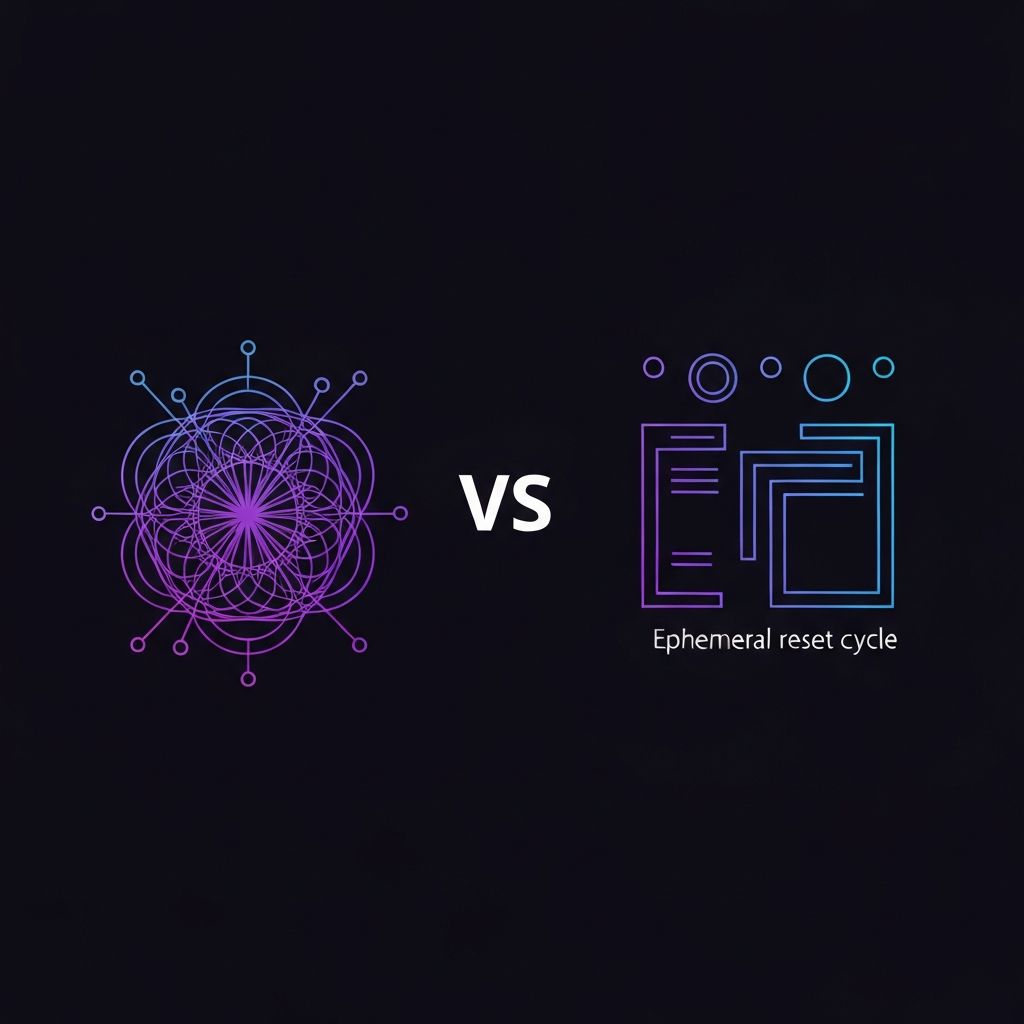
The debate between ephemeral and persistent endpoints isn't just about architecture—it's about fundamentally different security philosophies. Understanding these differences is crucial for organizations evaluating their endpoint strategy.
The Persistent Endpoint Model
Persistent endpoints—traditional desktops, laptops, and workstations—operate on the assumption that state should be maintained. User settings, applications, files, and system configurations persist across reboots and sessions.
This persistence offers familiarity and convenience, but it comes with significant security trade-offs. Every change to the system becomes permanent until explicitly removed. Malware can establish persistence. Configurations drift from intended baselines.
The Ephemeral Endpoint Model
Ephemeral endpoints take the opposite approach. They boot into a known-good state, execute required workloads, and reset completely when the session ends. Nothing persists unless explicitly saved to external storage.
This model treats endpoints as temporary execution environments rather than permanent installations. The endpoint itself becomes stateless—a vessel for running authorized workloads rather than a repository of accumulated state.
Security Implications
The security differences are profound. Persistent endpoints require constant monitoring, patch management, and threat hunting. Ephemeral endpoints eliminate entire threat categories by design.
Consider ransomware: on a persistent endpoint, ransomware can encrypt files, establish persistence, and spread laterally. On an ephemeral endpoint, ransomware might execute briefly before the session ends and the system resets to its clean baseline.
Making the Choice
Not every use case suits ephemeral endpoints, but more do than most organizations realize. Kiosks, point-of-sale systems, task workers, testing environments, and many other scenarios benefit enormously from the ephemeral model.
The key is matching architecture to requirements rather than defaulting to persistence because it's familiar.